To Carbonate or Not? Considerations for Alcoholic Beverage Manufacturing
To Carbonate or Not? Considerations for Alcoholic Beverage Manufacturing
When developing an alcoholic beverage, one of the decisions that can have a surprisingly big impact on the final product is whether to make it carbonated or still.
Carbonation can add refreshment, lift, and a distinctive drinking experience. It has also become an important part of several alcoholic beverage categories, from hard seltzers and canned cocktails to spritzes and sparkling wine-based beverages.
But carbonation isn't automatically the right choice for every alcoholic beverage. The decision affects more than the bubbles in the can. It can influence the formulation, flavor profile, processing, packaging, filling, transportation, and overall positioning of the finished product. So, when should an alcoholic beverage be carbonated—and when does a still format make more sense?
What Does Carbonation Add to an Alcoholic Beverage?
Carbonation is created by dissolving carbon dioxide (CO₂) into the beverage. The result is more than visible bubbles. Carbonation changes the way a beverage feels and tastes.
It can contribute:
- A crisp, refreshing mouthfeel
- A slight tingling sensation
- Perceived acidity and brightness
- A lighter drinking experience
- Increased aroma release
- A distinctive opening and pouring experience
For some alcoholic beverages, carbonation is an essential part of the product's identity. For others, it may work against the characteristics the brand is trying to create. That's why carbonation should be considered during beverage development rather than treated as an afterthought.
Popular Carbonated Alcoholic Beverages
Carbonation has become an important component across several alcoholic beverage categories.
Hard Seltzers
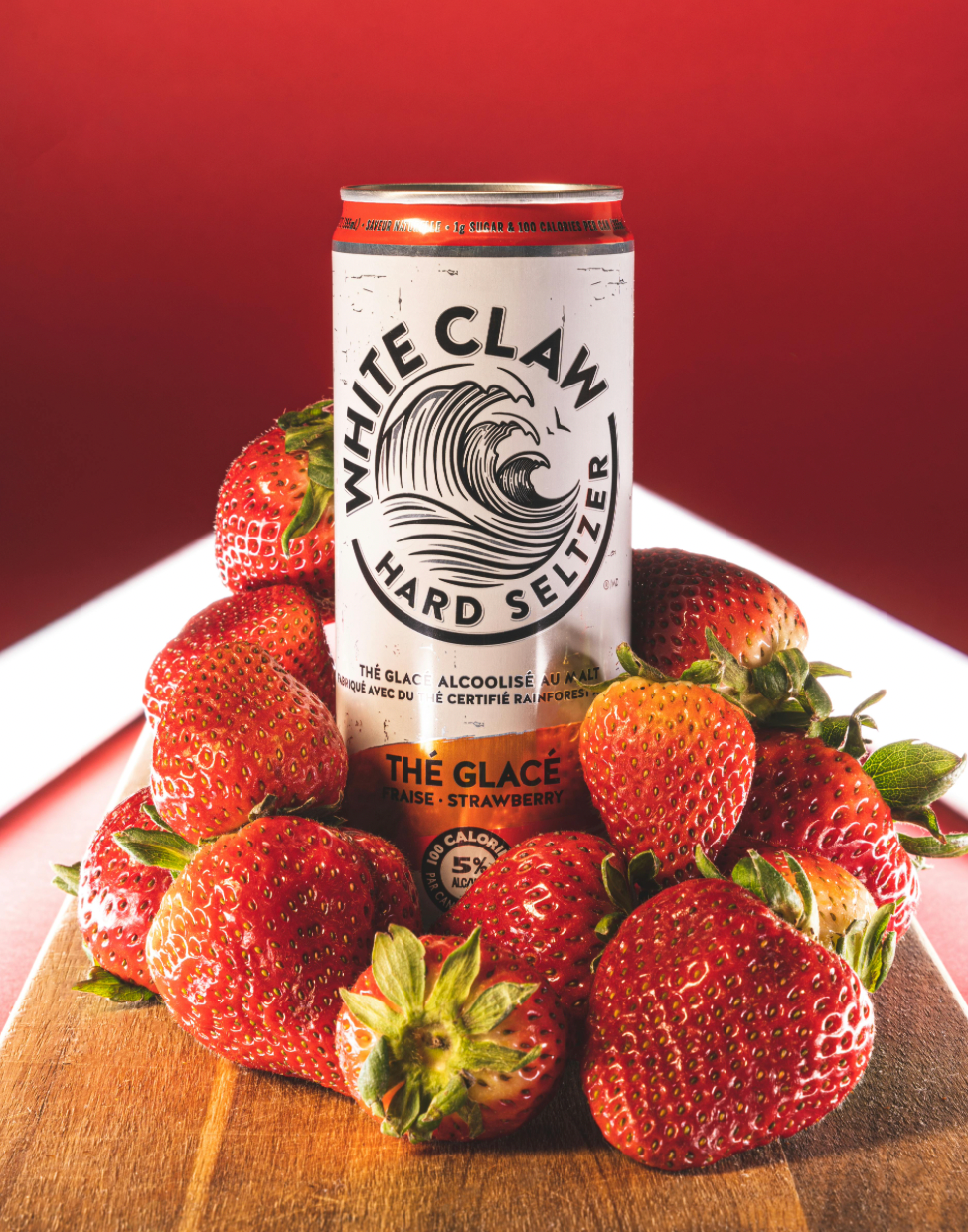
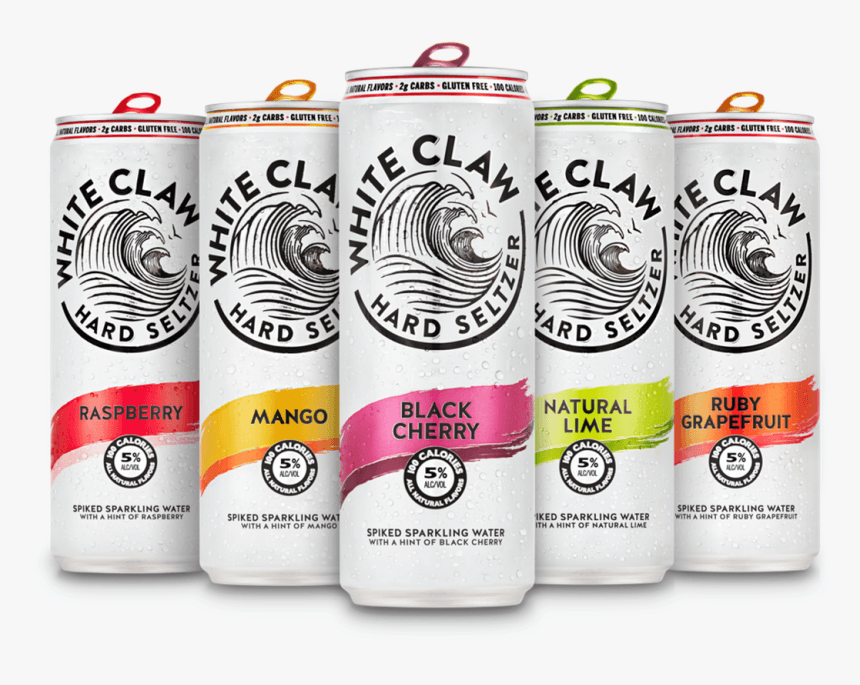
Hard seltzer is one of the clearest examples of an alcoholic beverage built around carbonation.
These beverages typically combine a relatively light alcoholic base with water, flavor, and carbonation. The carbonation contributes to the crisp, refreshing character associated with the category.
Canned Cocktails and Spirit-Based RTDs
Ready-to-drink cocktails have expanded well beyond traditional hard seltzer. Many canned cocktails use carbonation to create a lighter, more refreshing interpretation of familiar cocktails.
Examples can include carbonated versions of:
- Ranch water
- Vodka soda
- Paloma-style drinks
- Margaritas
- Mojitos
- Whiskey-based cocktails
- Fruit-forward cocktails
- Spritz-style drinks
Carbonation can make a cocktail feel particularly well suited to a can or other ready-to-drink format.
Wine Spritzers and Wine-Based RTDs
Wine-based beverages can also take advantage of carbonation. Spritzers and sparkling wine-inspired products use carbonation to create a lighter, brighter drinking experience while allowing brands to build around wine, fruit, botanicals, and other flavor profiles.
Sparkling Alcoholic Beverages
Sparkling beverages aren't limited to hard seltzer. Sparkling versions of fruit beverages, wine-based drinks, aperitif-style products, and other alcoholic beverages can all use carbonation as part of the product's identity.
Why Carbonation Continues to Matter in Alcoholic Beverage Development
One reason carbonation continues to be attractive to beverage brands is its association with refreshment and drinkability. Carbonation can also help create differentiation within an increasingly crowded RTD market.
A brand isn't simply selling an alcoholic beverage. It's creating a sensory experience. The sound of opening the can, the bubbles in the glass, the aroma released when the beverage is poured, and the crisp sensation of the first sip all become part of that experience. For certain products, carbonation is therefore both a formulation decision and a branding decision.
Should Every Alcoholic Beverage Be Carbonated? No.
This is where beverage development gets more interesting. A carbonated product isn't inherently better than a still product. The right format depends on what you're trying to accomplish with the beverage. Consider the experience you're trying to create.
If the product is intended to be:
- Crisp
- Light
- Refreshing
- Effervescent
- Similar to a soda or sparkling cocktail
Carbonation may be a natural fit.
But if the product is intended to be:
- Rich
- Creamy
- Spirit-forward
- Full-bodied
- Slow-sipping
- Dessert-inspired
A still format may make more sense.
How Carbonation Affects Alcoholic Beverage Formulation
Adding carbonation changes the formulation considerations for an alcoholic beverage.
The finished product needs to taste balanced after carbonation, not simply before it.
Flavor Perception
Carbonation can change how consumers perceive flavors. A carbonated beverage may taste brighter or more acidic than the same formulation without carbonation. That means sweetness, acidity, alcohol, and flavor intensity may need to be evaluated differently depending on the final format. A formulation that tastes balanced when still may require adjustments once carbonation is introduced.
Alcohol and Carbonation
Alcohol content is another consideration. Ethanol can influence the way carbonation behaves and can also affect the sensory perception of the finished beverage. As alcohol levels, sugar levels, acids, flavors, and other ingredients change, the beverage's carbonation characteristics can change as well. This is one reason a commercial alcoholic beverage should be developed as a complete formulation rather than simply taking an existing cocktail recipe and adding CO₂.
Ingredients and Stability
Not every ingredient behaves the same way in a carbonated beverage. Fruit components, juices, flavors, sweeteners, botanicals, and other ingredients may affect the beverage's appearance, stability, mouthfeel, and carbonation. The formulation needs to be evaluated as a complete system.
Carbonation and Alcoholic Beverage Manufacturing
The decision to carbonate also affects the manufacturing process. Carbonated beverages require equipment and processes designed to introduce and retain dissolved CO₂ consistently.
Several factors can influence carbonation during production, including:
- Beverage temperature
- Pressure
- CO₂ levels
- Formulation
- Package type
- Filling conditions
- Production speed
Temperature is particularly important because carbonation behavior is affected by the temperature of the beverage during processing. The manufacturing process therefore needs to be designed around the specific product rather than treating carbonation as a simple final step.
Packaging Considerations
Carbonation also changes packaging requirements. A carbonated alcoholic beverage contains internal pressure, so the package needs to be appropriate for the product and its intended processing and distribution conditions.
Aluminum Cans
Cans are widely used for carbonated alcoholic beverages because they are lightweight, portable, and well suited to high-volume beverage production. They're commonly seen across hard seltzers, canned cocktails, and other RTD categories.
Glass Bottles
Glass can be an attractive option for sparkling alcoholic beverages, particularly when presentation is an important part of the product.
PET and Other Formats
Certain carbonated beverages may use specialized plastic packaging designed for products containing carbonation. The appropriate package depends on the formulation, carbonation level, processing method, distribution requirements, and brand strategy.
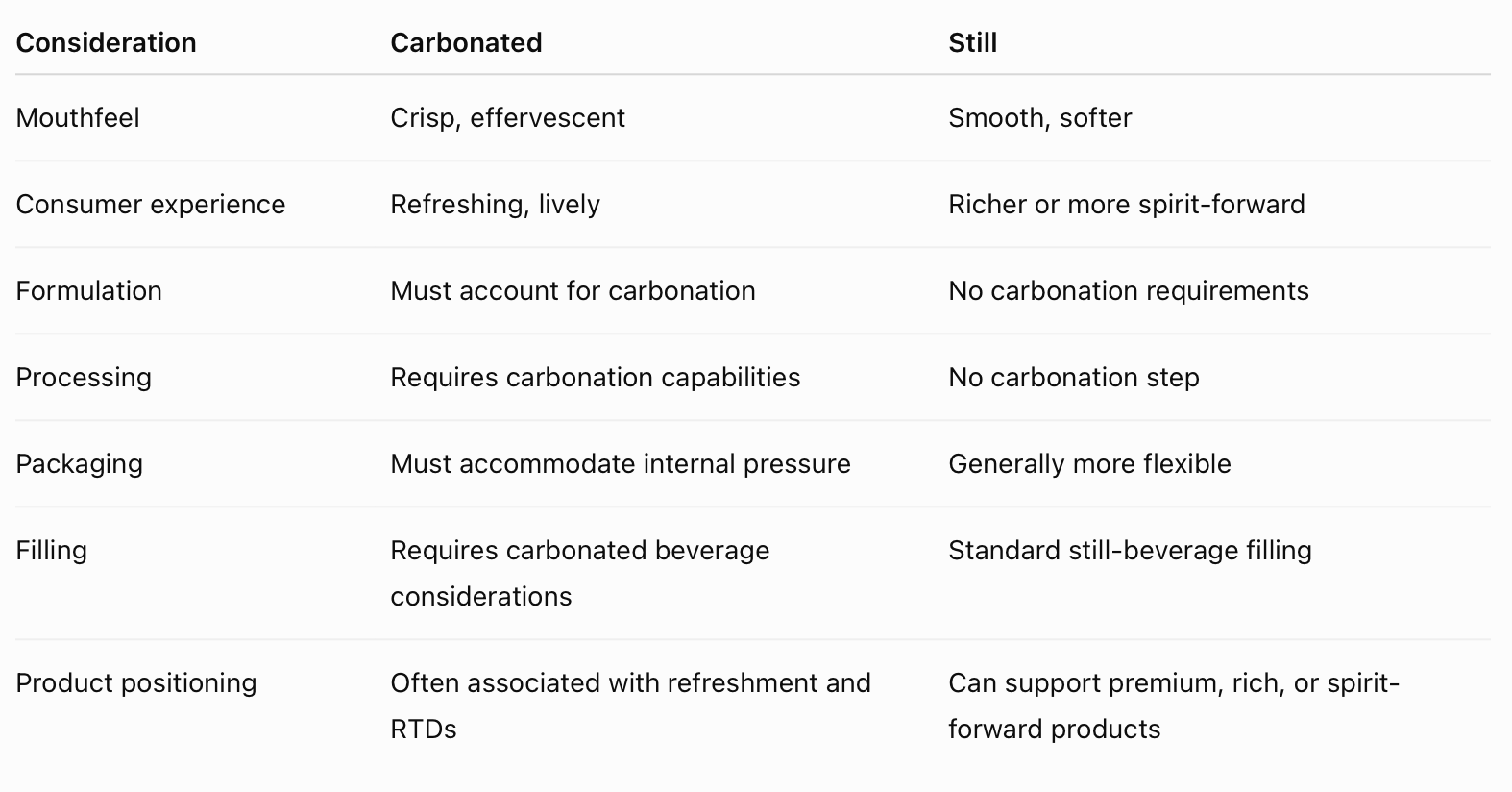
Carbonated vs. Still Alcoholic Beverages: The Manufacturing Difference
When evaluating whether to carbonate an alcoholic beverage, it's useful to look at the decision from the entire manufacturing perspective.
When Should You Consider Carbonation?
Carbonation may be worth considering if your alcoholic beverage is designed to be:
- Refreshing - Carbonation can reinforce a light, crisp drinking experience.
- Fruit-forward - The combination of fruit flavors and carbonation can create a bright sensory profile.
- A Cocktail Alternative - Carbonation can make familiar cocktails feel lighter and more approachable in a ready-to-drink format.
- Portable - Carbonated beverages are particularly well established in cans and other convenient formats.
- Spritz- or Seltzer-Inspired - If bubbles are part of the category or consumer expectation, carbonation may be central to the concept.
When Might a Still Beverage Make More Sense?
A still format may be worth considering when the beverage is intended to emphasize:
- Spirit Character - A still beverage can allow the base spirit and its flavor profile to take center stage.
- Richness - Creamy or full-bodied beverages generally aren't natural candidates for carbonation.
- Complex Flavor - Some spirit-forward beverages are designed around slower sipping rather than refreshment.
- Premium Presentation - A still beverage may support a different type of drinking occasion and brand positioning.
- Traditional Cocktail Characteristics - Not every cocktail benefits from bubbles. Some are defined by their smooth, spirit-forward character.
Don't Add Carbonation Just Because It's Trending
Carbonation can certainly be an attractive option for an alcoholic beverage, particularly in the RTD market.
But the question shouldn't simply be: “Can we carbonate it?”
The better question is: “Does carbonation make the product better?”
If carbonation improves the flavor, mouthfeel, drinking occasion, and overall product concept, it may be the right direction. If it masks the character of the beverage, creates formulation challenges, or doesn't fit the intended consumer experience, a still format may be the better starting point.
The Bottom Line: To Carbonate or Not?
Carbonation is ultimately a product development decision, not just a manufacturing decision. For some alcoholic beverages, the bubbles are an integral part of what makes the product work. For others, keeping the beverage still allows the flavor, texture, and alcohol character to take center stage.
Before moving into commercial production, brands should consider:
- What type of drinking experience are you creating?
- Does carbonation complement the flavor profile?
- What alcohol level are you targeting?
- How will carbonation affect sweetness and acidity?
- Are the ingredients compatible with a carbonated format?
- What packaging will the product require?
- What processing and filling capabilities are needed?
- How will the product perform throughout its intended shelf life?
- Does carbonation make sense for the intended consumer and occasion?
Answering these questions early can help prevent expensive formulation and packaging changes later in the development process.
Developing a Carbonated or Still Alcoholic Beverage
Whether you're developing a hard seltzer, spirit-based canned cocktail, sparkling wine beverage, RTD cocktail, or still alcoholic beverage, the manufacturing process should be part of the conversation from the beginning.
Big Brands Beverage works with brands developing alcoholic beverages for commercial production, including formulation, processing, packaging, and manufacturing considerations.
Not sure whether your beverage should be still or sparkling? That's part of the development process.
Have an alcoholic beverage concept ready for commercial production? Contact Big Brands Beverage to discuss your formulation and manufacturing project.